



It should go without saying that Charlie Kirk’s assassination was tragic. Even beyond his roles as a family man and a political commentator, his life had intrinsic value. I was both shocked and saddened by the death of someone who had such a significant presence on the national stage.
If you are familiar with my work, you could guess I am no fan of his commentary due to his views on race and jokes about Muslims’ deaths in Gaza. However, I do not wish to litigate his legacy, as there are plenty of people doing so with a selectively incomplete understanding of his worldview.
I instead wish to wade into the discussion on political rhetoric and violence. There have been many chaos agents taking advantage of the assassination to declare war on the other side. In general, the left has been painted as a movement that is, at best, incapable of controlling its extremists and, at worst, utilizing rhetoric to inspire violence.
If we are discussing political violence, the American left has not practiced it. If that is not clear from many liberals’ and leftists’ aversion to using guns, FBI data (that the DOJ recently archived for some reason) shows much more political violence is right-wing in nature. However, I do not immediately view this as a left vs. right issue, but more a question of who can reasonably interpret rhetoric and language, and who cannot.
There is a point where rhetoric can rise to the level of incitement to violence. What constitutes an unacceptable or dangerous level of heated rhetoric?
I would draw the line at explicit calls to violence as well as certain implicit forms of communication, for example, known dog whistles. When Elon Musk said, “The left is the party of murder,” I believed that was an acceptable statement from a violence perspective, since he stopped short of actively calling for more violence. Also, reasonable people would not take many of his statements at face value. I also believe it’s acceptable to call administration officials “fascist” or “Nazi,” even if that were not true, by virtue of freedom of speech.
If we were to police these kinds of speech, the harm wrought by such censorship would outweigh the benefits. Although the Trump administration is moving in that direction, I doubt it will ever reach total fascism.
However, imagine we did have a fully fascist regime. We would all agree such a regime would be worth resisting, preferably before they consolidate control, so we can avoid the violence that total police states are capable of.
How do we pre-empt a fully authoritarian government without risking life and limb by resorting to violence? Through speech. Through persuasion and debate, people may realize although a president may generally align with their views, his agenda does include authoritarian methods and objectives.
The issue with the “party of murder” or “Nazi” rhetoric is some people will interpret such heated rhetoric as an implicit call to violence. Whether it be the stereotypical 4chan-using gamer edgelord speaking in emoji-laden riddles, or someone who does not fit that mold, there are always isolated individuals whose echo chamber never gave them exposure to the sorts of common values regarding the value of life we all share.
How do we solve the problem of them resorting to violence? To me, the first step is gun control. While my personal view on gun control is much more restrictive than the average person’s, most Americans do agree there are a lot of reasonable gun control measures that could be, but have not been, legislated. We should at least start there and re-evaluate our approach in the future.
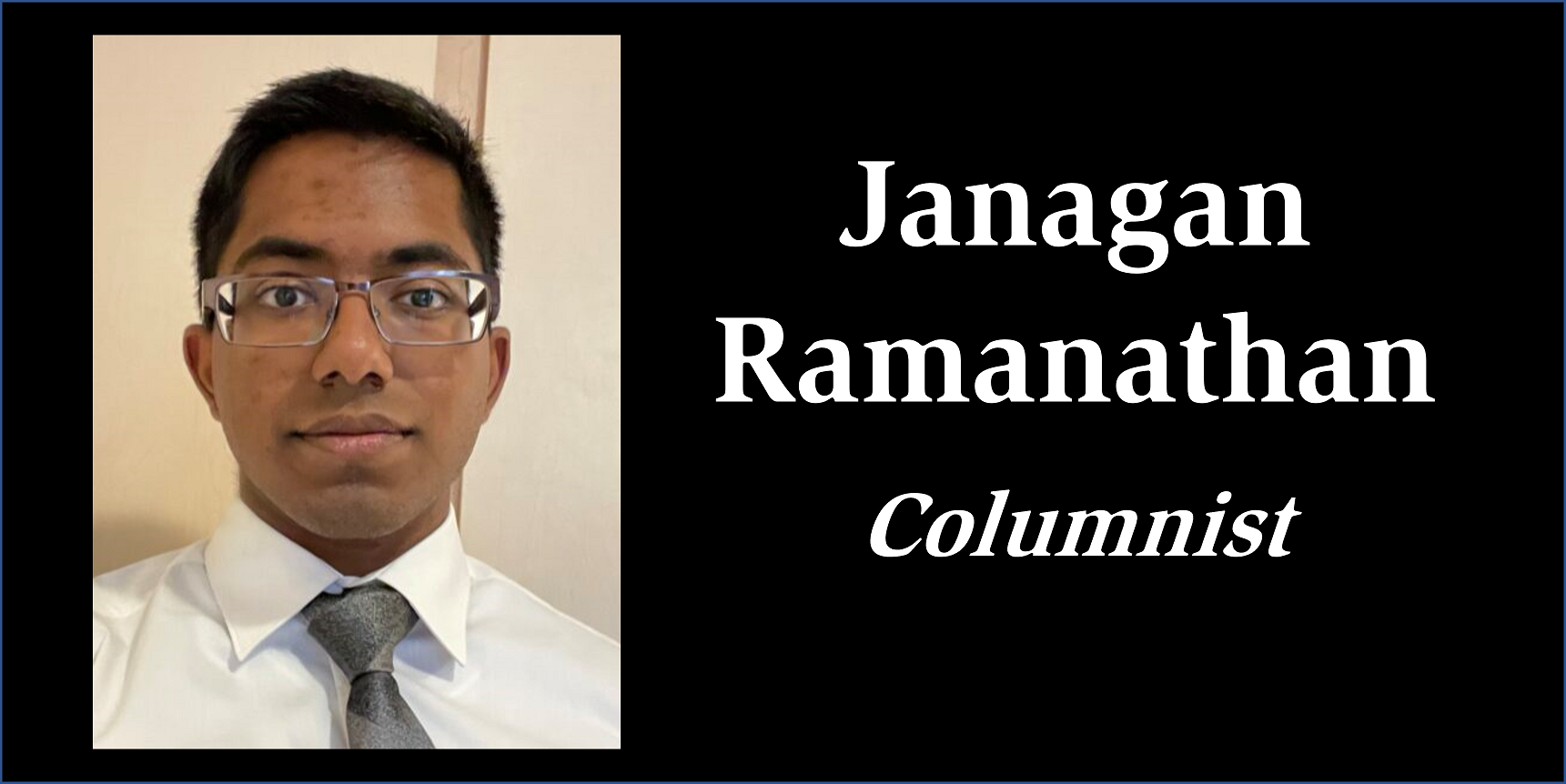
Janagan Ramanathan is a Sartell High School alum, former U.S. Naval Academy midshipman and current aerospace engineering major at the University of Minnesota-Twin Cities.